.
CINÉ-PERFORMANCE
LA NUIT DES MORTS-VIVANTS
Une création de La Muse en Circuit – CNCM
UN FILM FONDATEUR DU CINÉMA FANTASTIQUE RÉINVENTÉ À TRAVERS UNE CRÉATION SCÉNIQUE ET SONORE, POUR ORCHESTRE DE MUSICIENS, HAUT-PARLEURS ET SYNTHÉTISEURS MODULAIRES.
Film fondateur d’un genre cinématographique, mais surtout d’une mythologie contemporaine particulièrement révélatrice, La Nuit des morts-vivants de George A. Romero est un monument qui, près de soixante ans après sa création, continue d’alerter l’humanité sur la monstruosité potentielle de nos sociétés.
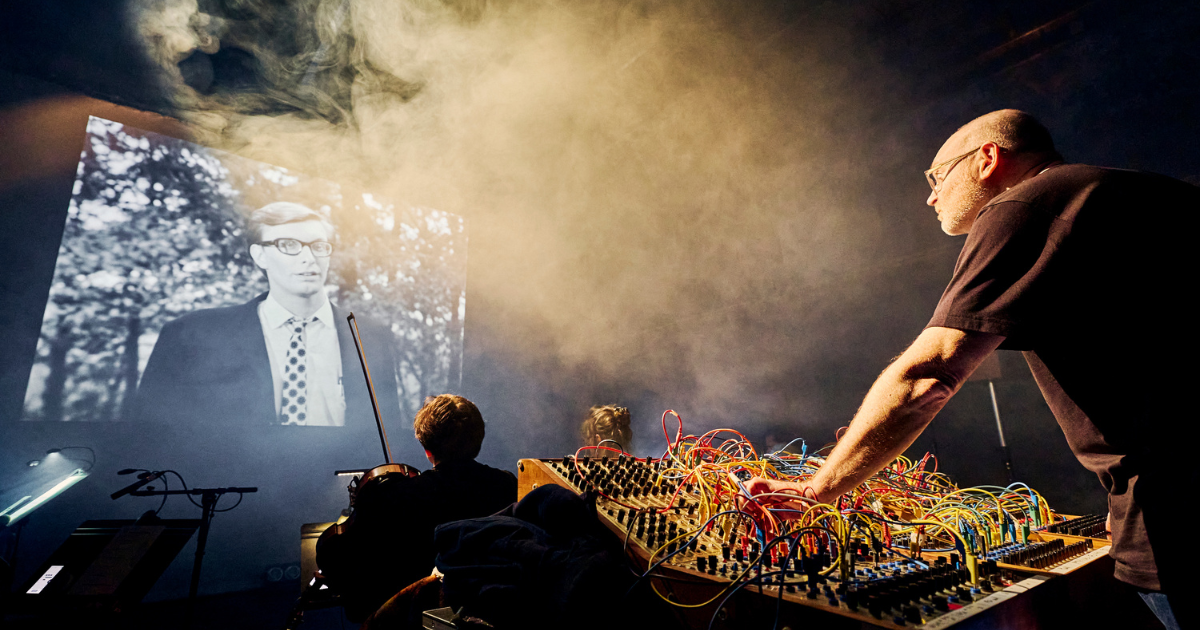
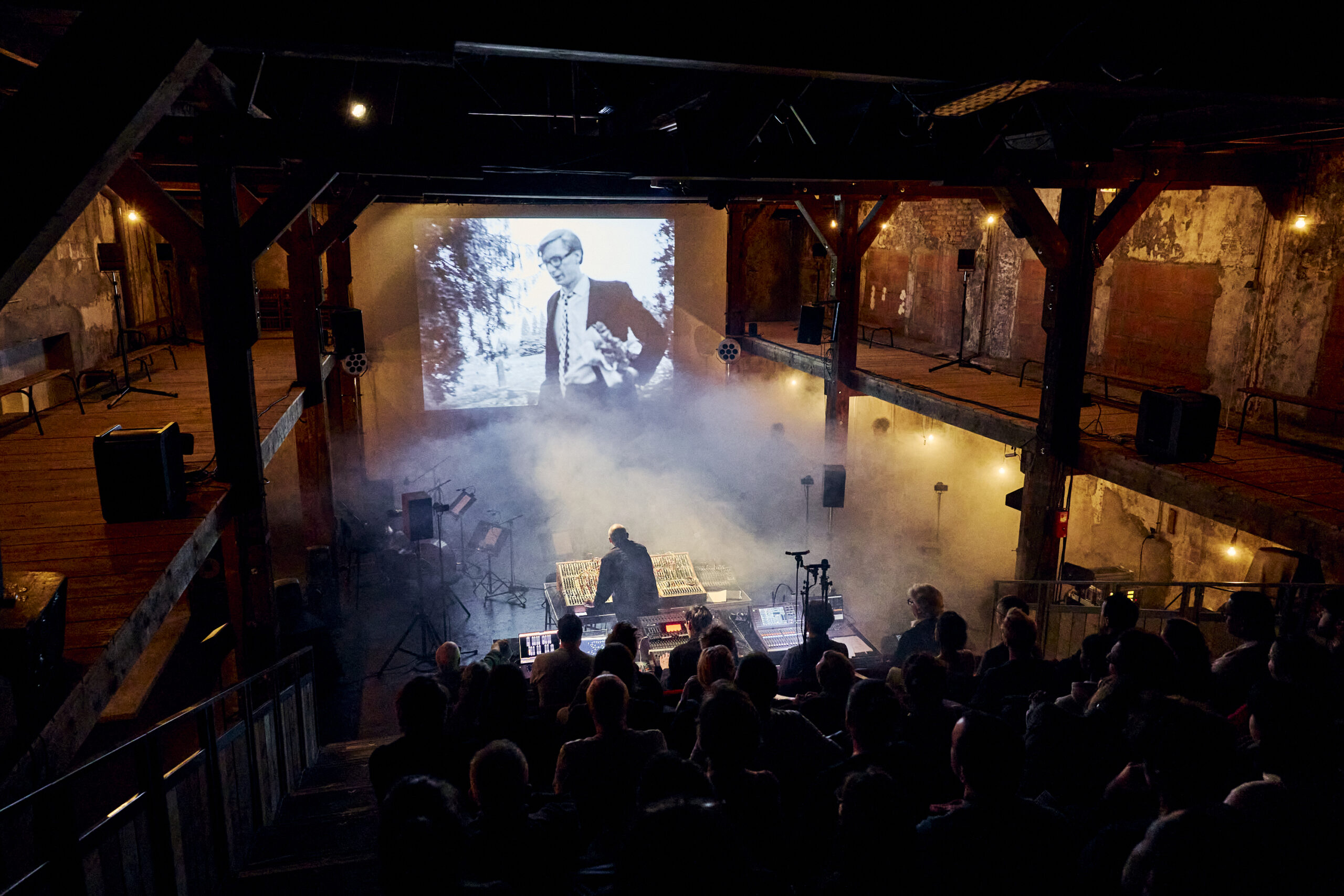
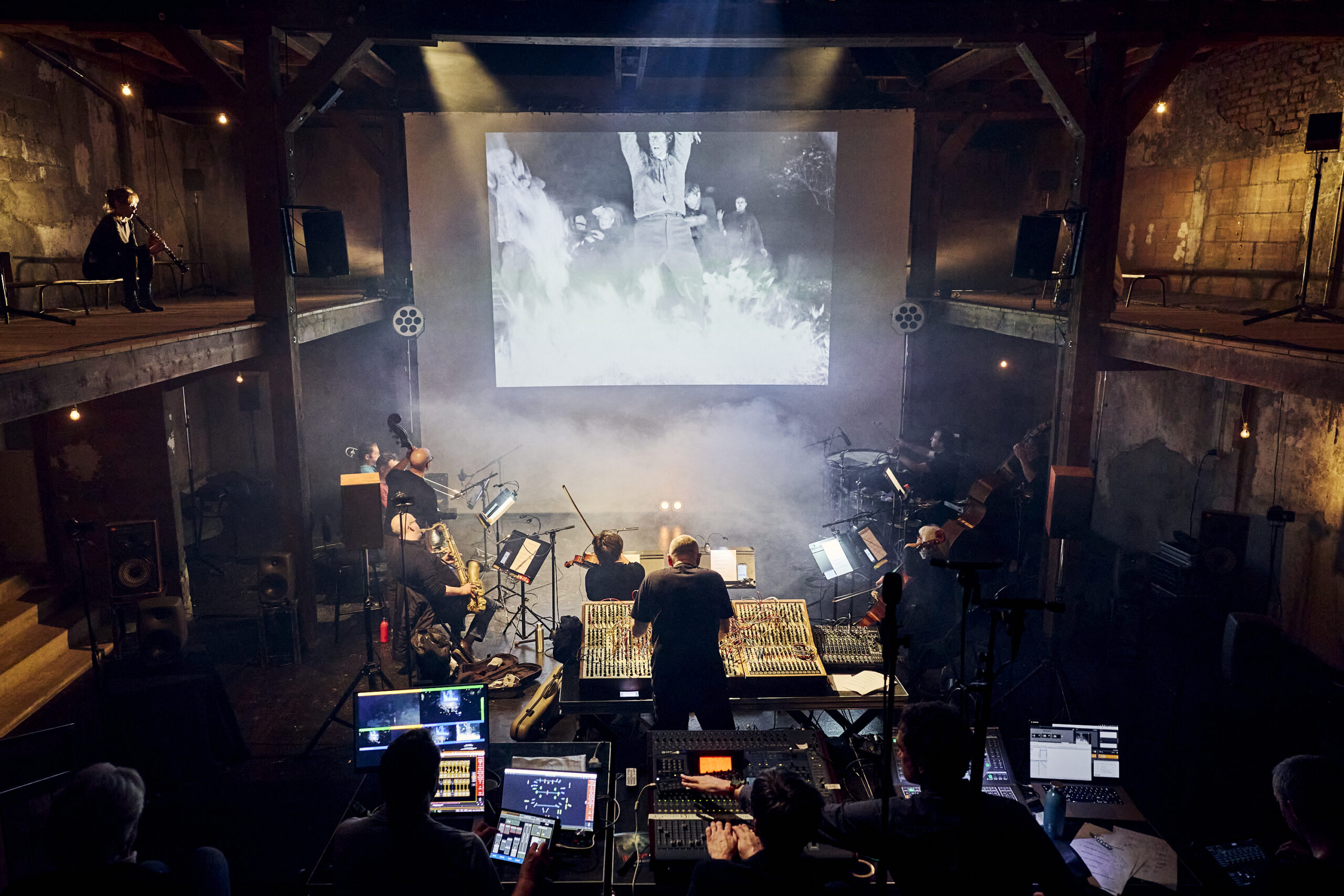
La Muse en Circuit – CNCM propose un montage original du film et une mise en espace performative qui placent la musique au centre de l’écoute. Une dialectique singulière s’établit entre les synthétiseurs modulaires et un orchestre éclectique de musiciens contemporains, prolongé par un dispositif immersif de haut-parleurs.
Véritable laboratoire formel, cette création explore la pluridisciplinarité à travers des rapports entre l’image et le son qui transcendent l’écran et se prolongent sur le plateau. Le parti pris ne cherche pas l’interaction illustratrice, mais joue avec la synchronisation d’éléments dramaturgiques disparates, décalant ainsi une lecture trop académique de la narration par l’image et le son.
UNE ÉCRITURE SCÉNIQUE ENTRE IMAGE ET SON
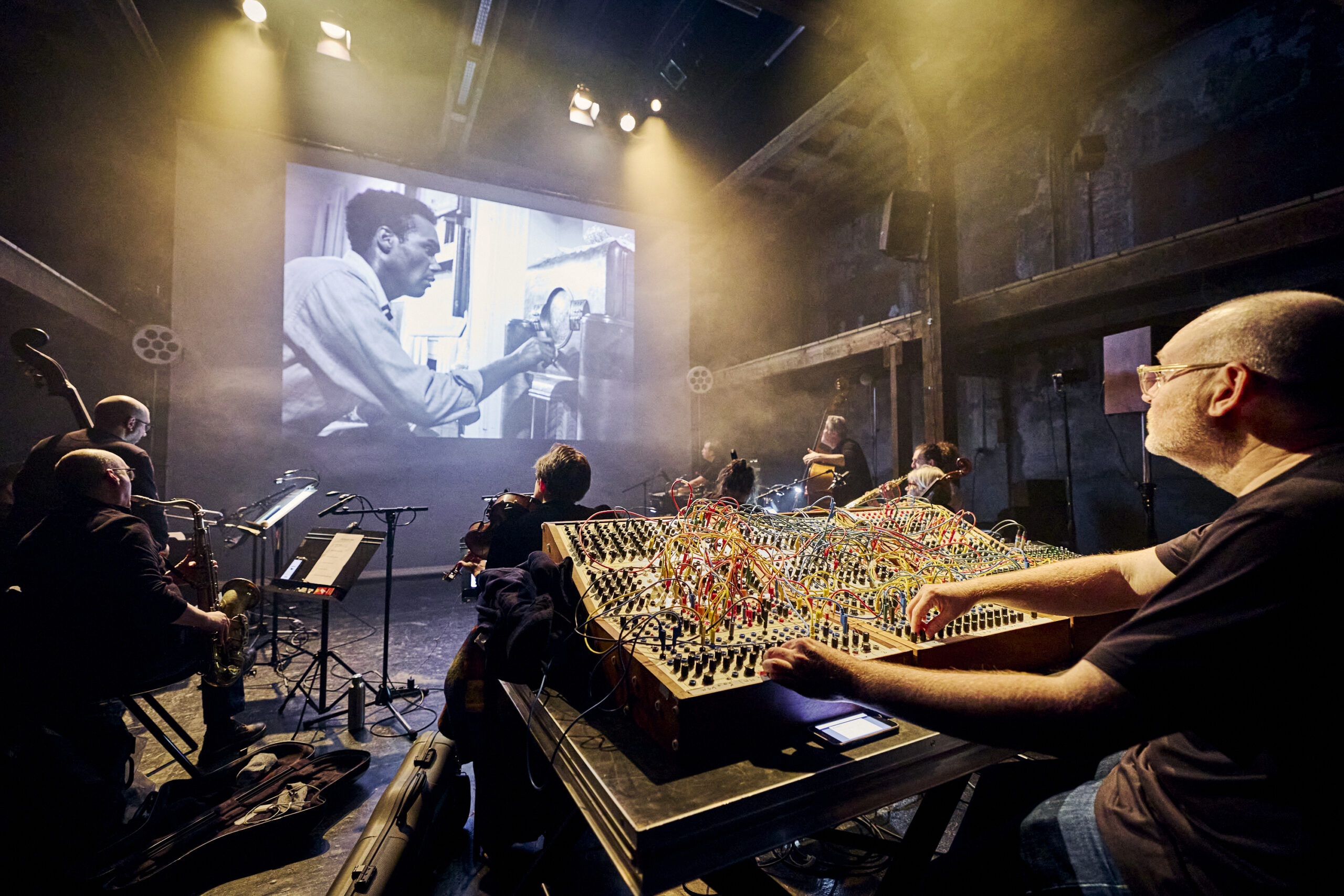
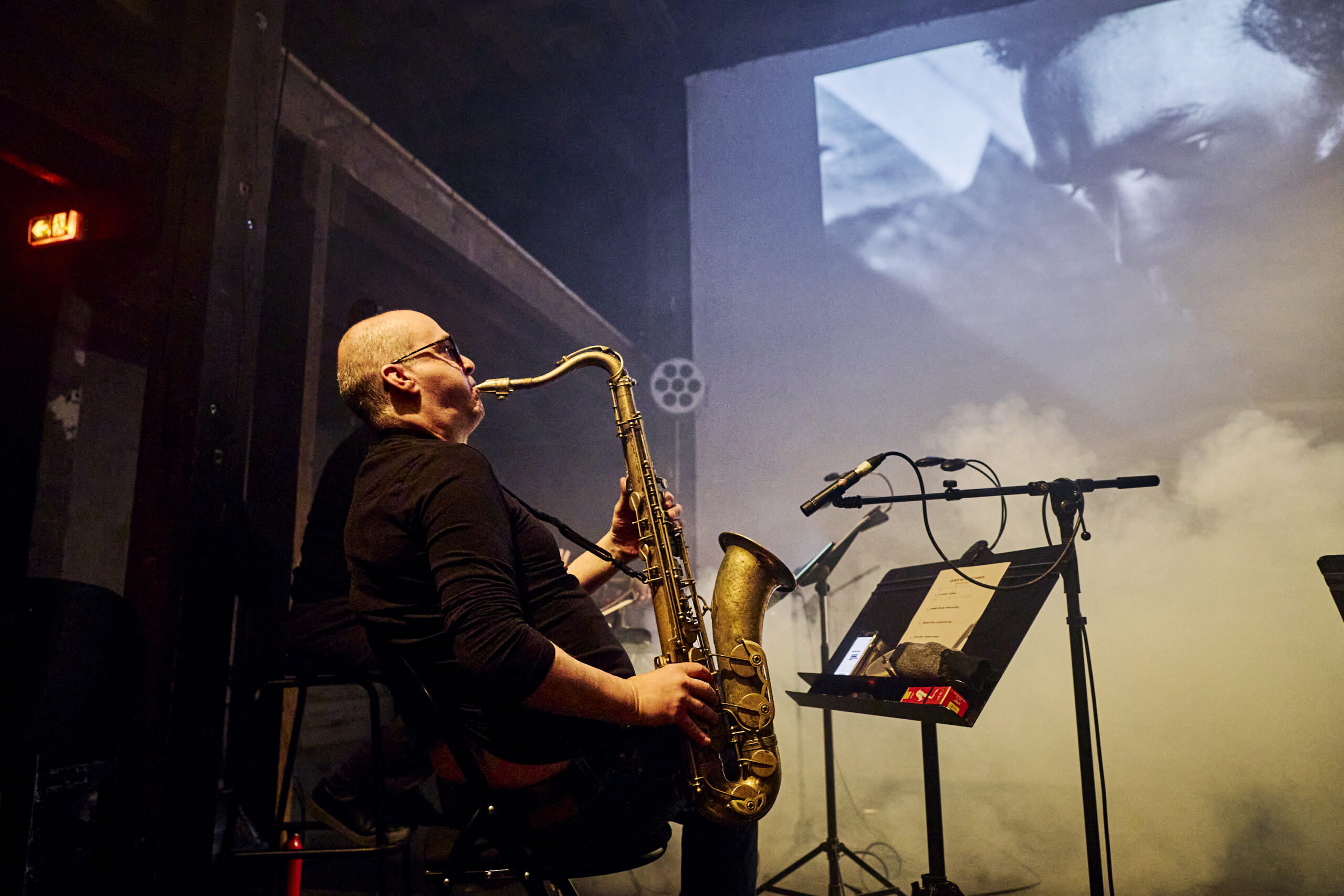
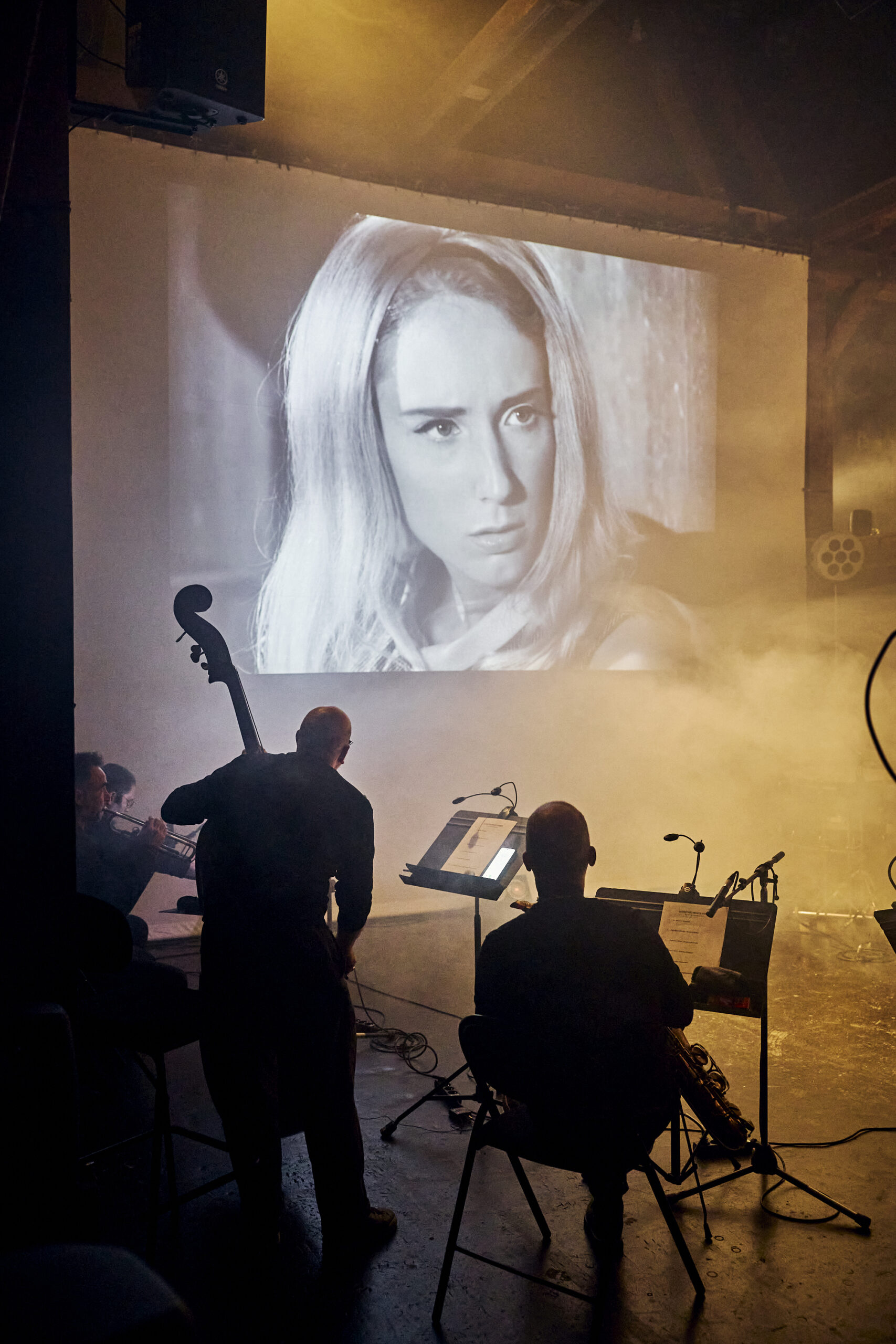
Le montage original du film devient le point de départ d’une construction scénique qui ne se contente pas de suivre la narration à l’écran. Les images et les sons développent leurs propres écritures, se répondent, se décalent et construisent une dramaturgie singulière. Les flashs et les stroboscopes sont, par exemple, des outils de narration plastique qui font référence aux jump scares, presque popularisés par ce film. Ils permettent de développer une écriture contrapuntique de la scène, en écho plastique aux séquences de l’écran.
Les musiciens se déplacent sur le plateau et prolongent l’errance macabre des zombies, interrogeant ainsi ce qui est encore vivant aujourd’hui. L’espace scénique devient le lieu d’une rencontre entre les présences physiques, les images projetées, les mouvements et les matières sonores.
Le film devient ainsi le support d’inspiration d’une construction scénique qui interroge la place du vivant dans la musique et celle de la monstruosité dans l’art.
UN ORCHESTRE ÉTENDU : EXPLORATION SONORE ET SPATIALISATION
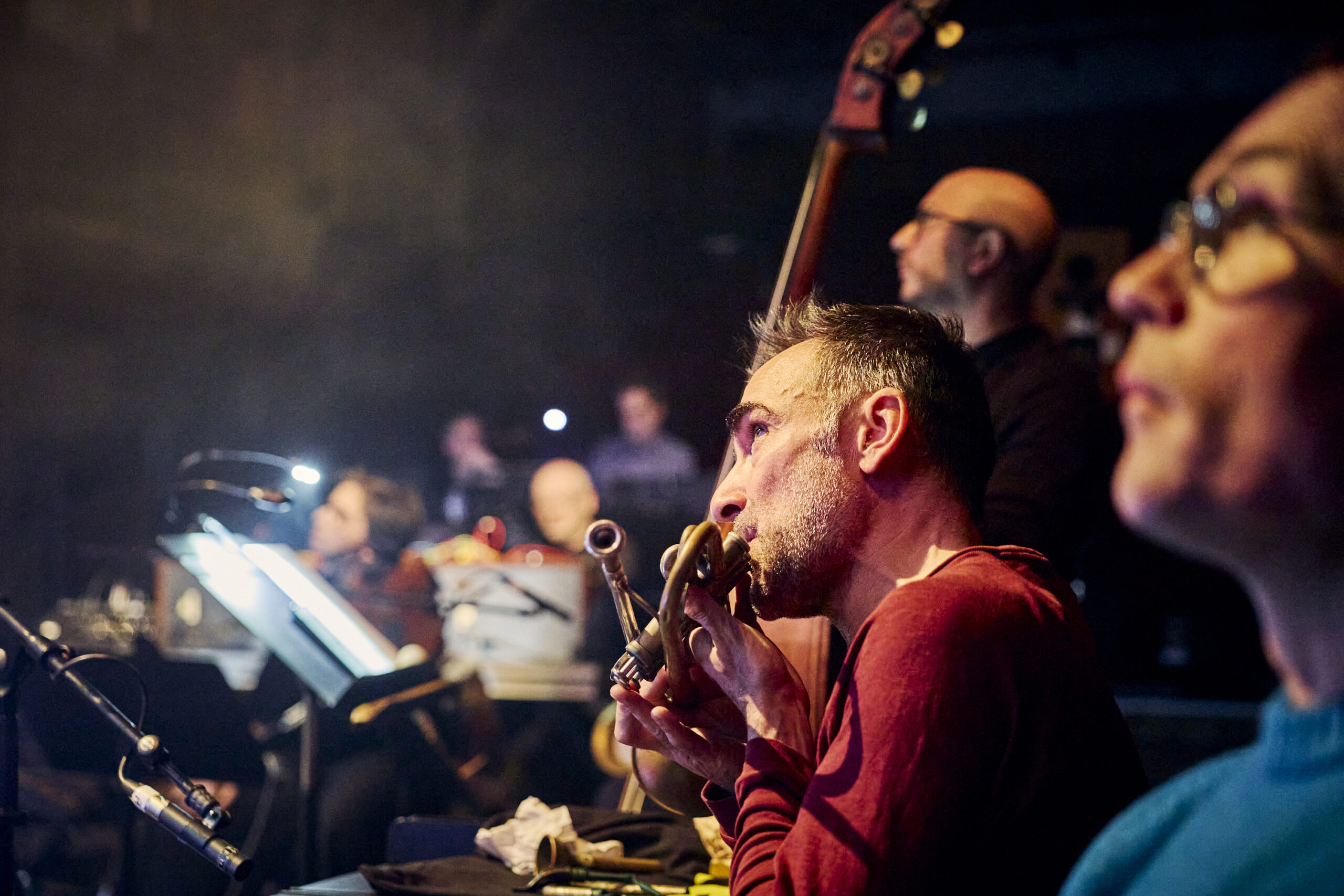
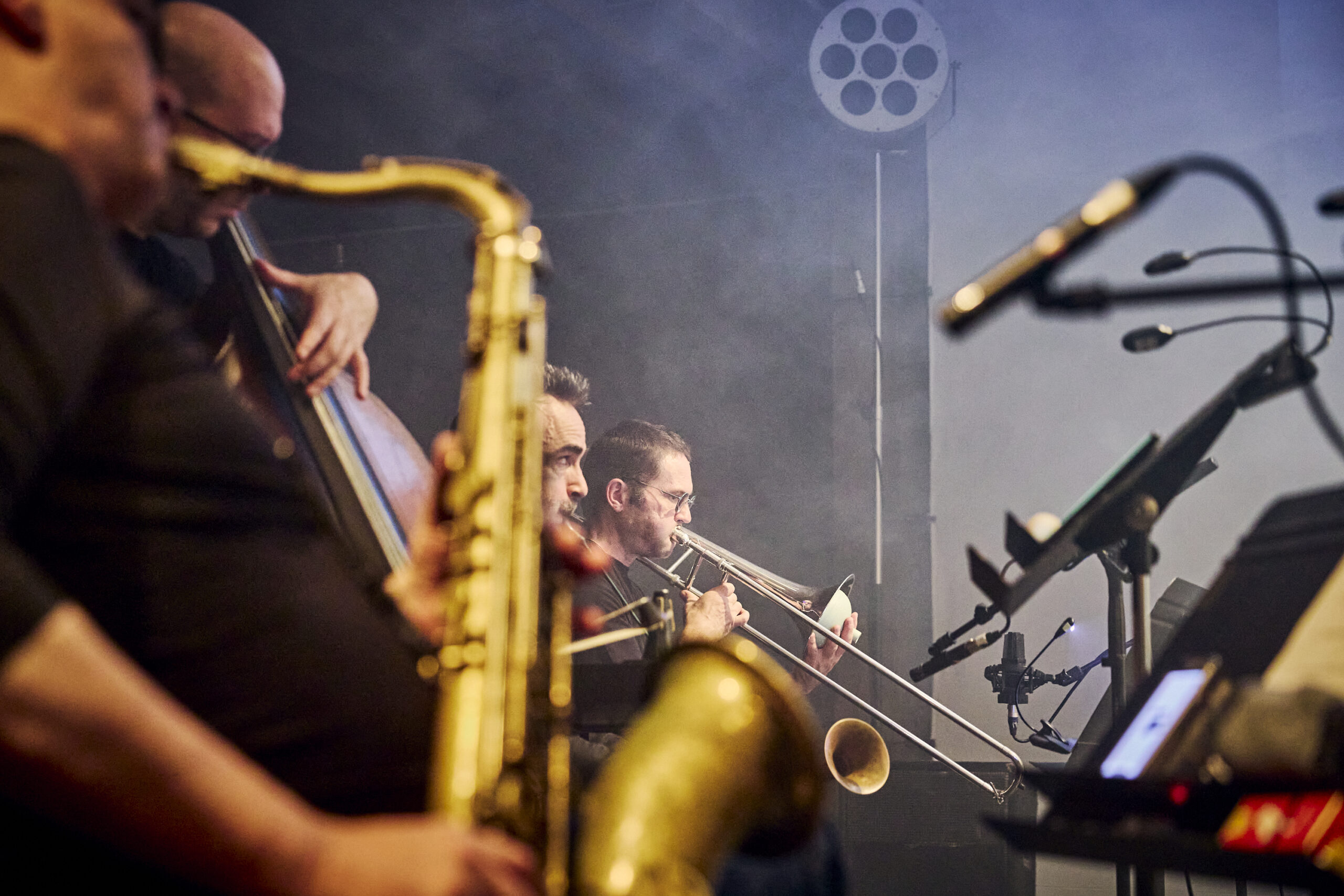
L’orchestre n’est pas seulement instrumental, mais se trouve prolongé par un dispositif de haut-parleurs qui propose une interprétation non réaliste de l’acoustique scénique. Le travail sur la microphonie de proximité permet de mettre en espace les sons instrumentaux dans une perspective électroacoustique. Il ne s’agit en aucun cas de reproduire ou simplement d’amplifier les sons de l’orchestre, mais bien au contraire de les extraire de leur équilibre naturel pour proposer une écoute immersive et décalée. Cette approche transpose à l’oreille les procédés cinématographiques du zoom, du gros plan ou du travelling. Les petits sons, presque inaudibles, produits par les instruments acoustiques sont captés au plus près, puis transformés par les filtres successifs des micros, des consoles et des haut-parleurs, avant de voyager dans l’espace. Les sons instrumentaux deviennent ainsi des matières sonores autonomes, dont les dimensions et les perceptions sont profondément transformées. L’espace acoustique se compose et se recompose au fil de cette exploration.
SYNTHÉTISEURS MODULAIRES ET MATIÈRES SONORES
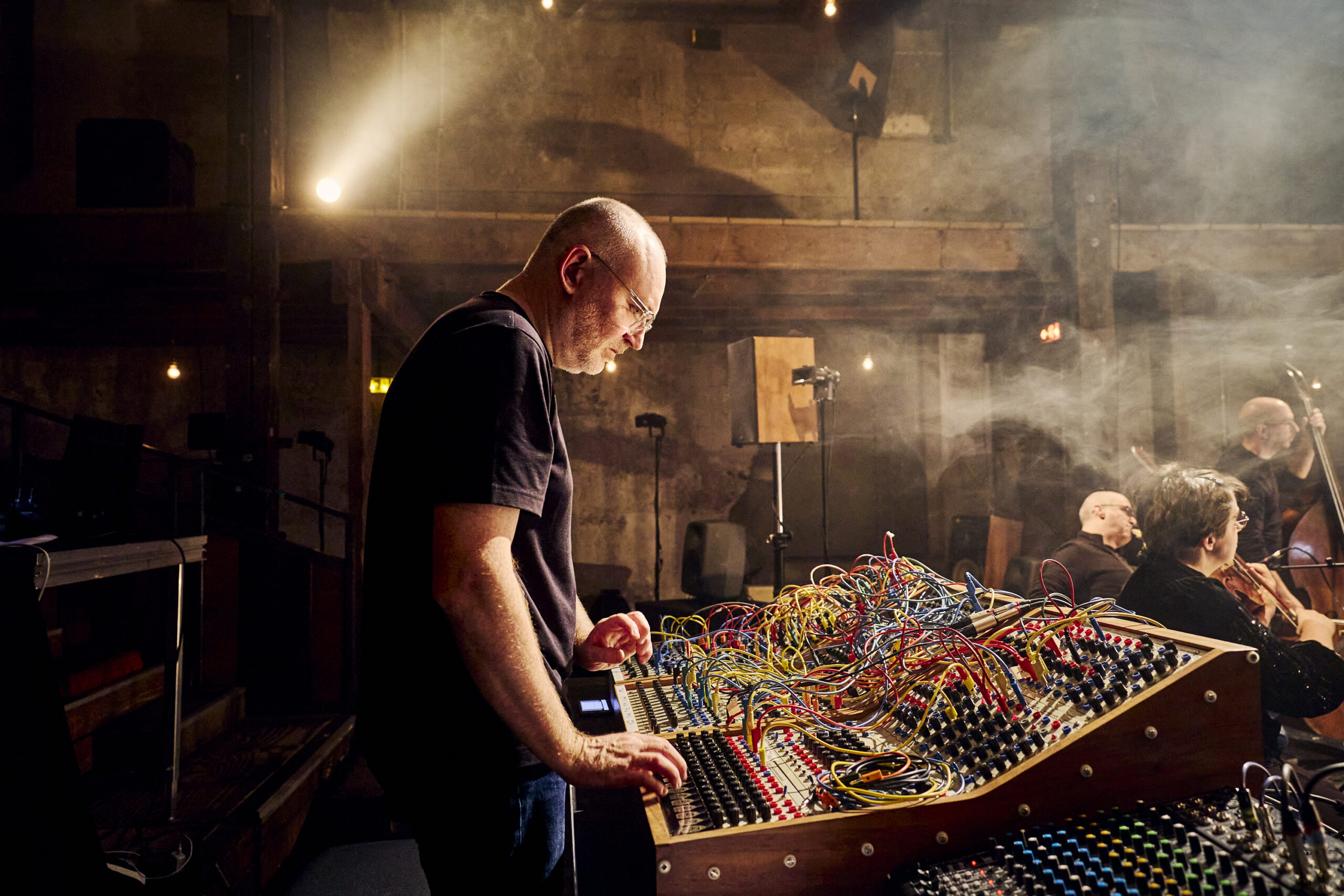
Les synthétiseurs modulaires occupent une place centrale dans cette construction sonore. Le mythique système SERGE de La Muse en Circuit ouvre un champ d’exploration où les sonorités électroniques rencontrent les instruments acoustiques et les bruits du plateau. Le bruit d’une machine à fumée peut ainsi former un duo avec les générateurs de bruits du système SERGE Modular, qui dialogue à son tour avec les frottements d’archets suramplifiés d’un violoncelle. Ces rencontres entre des sources sonores hétérogènes composent une écriture de plateau où les frontières entre musique, bruit et matière sonore deviennent poreuses. Les sons sont détournés de leur fonction première, transformés et mis en relation pour faire émerger de nouvelles formes d’écoute. Les écritures de plateau interrogent ainsi, par le son, notre rapport au beau et sa dépendance anthropophage à la laideur.
L’ONCEIM ET L’ACOUSMONIUM MOTUS
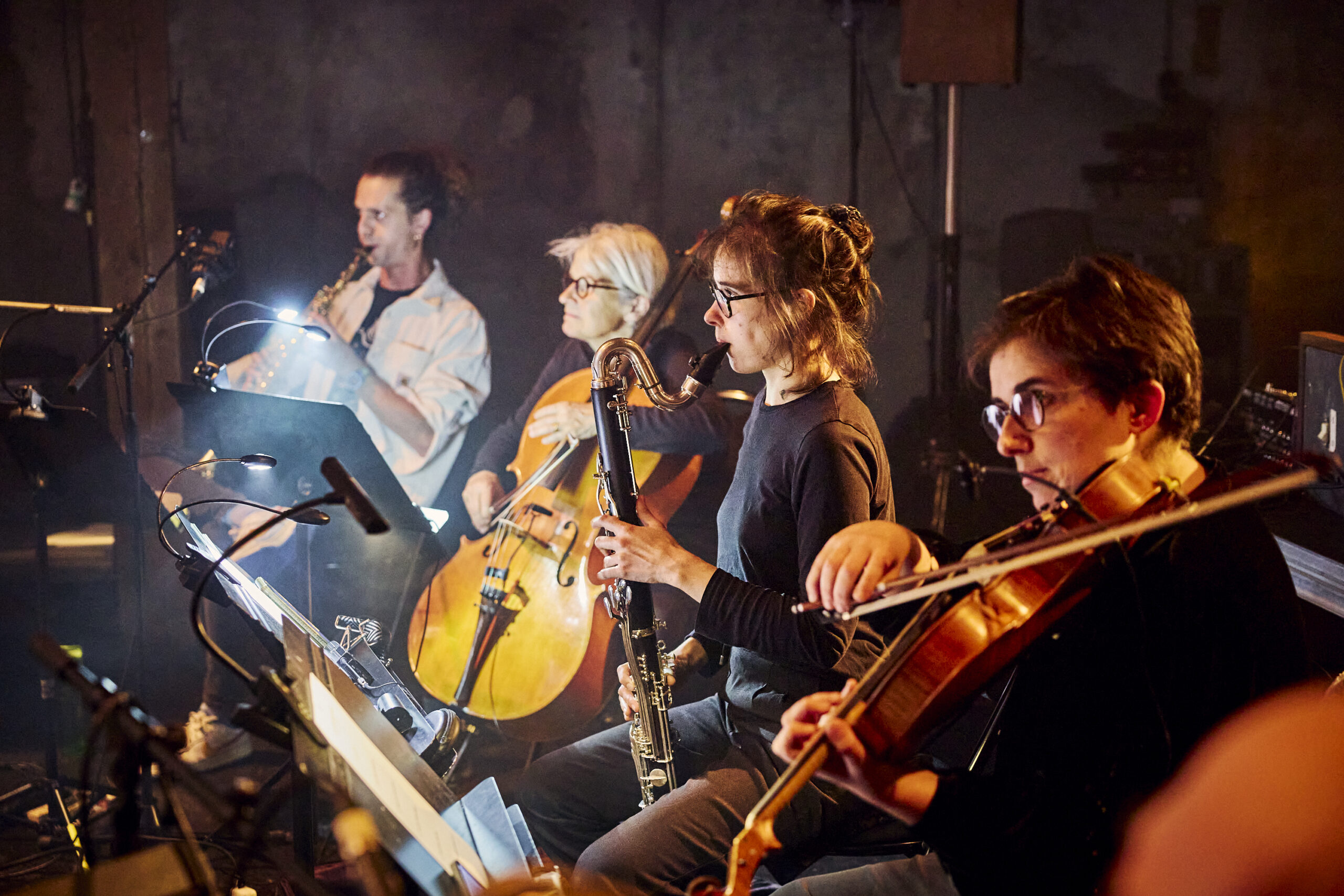
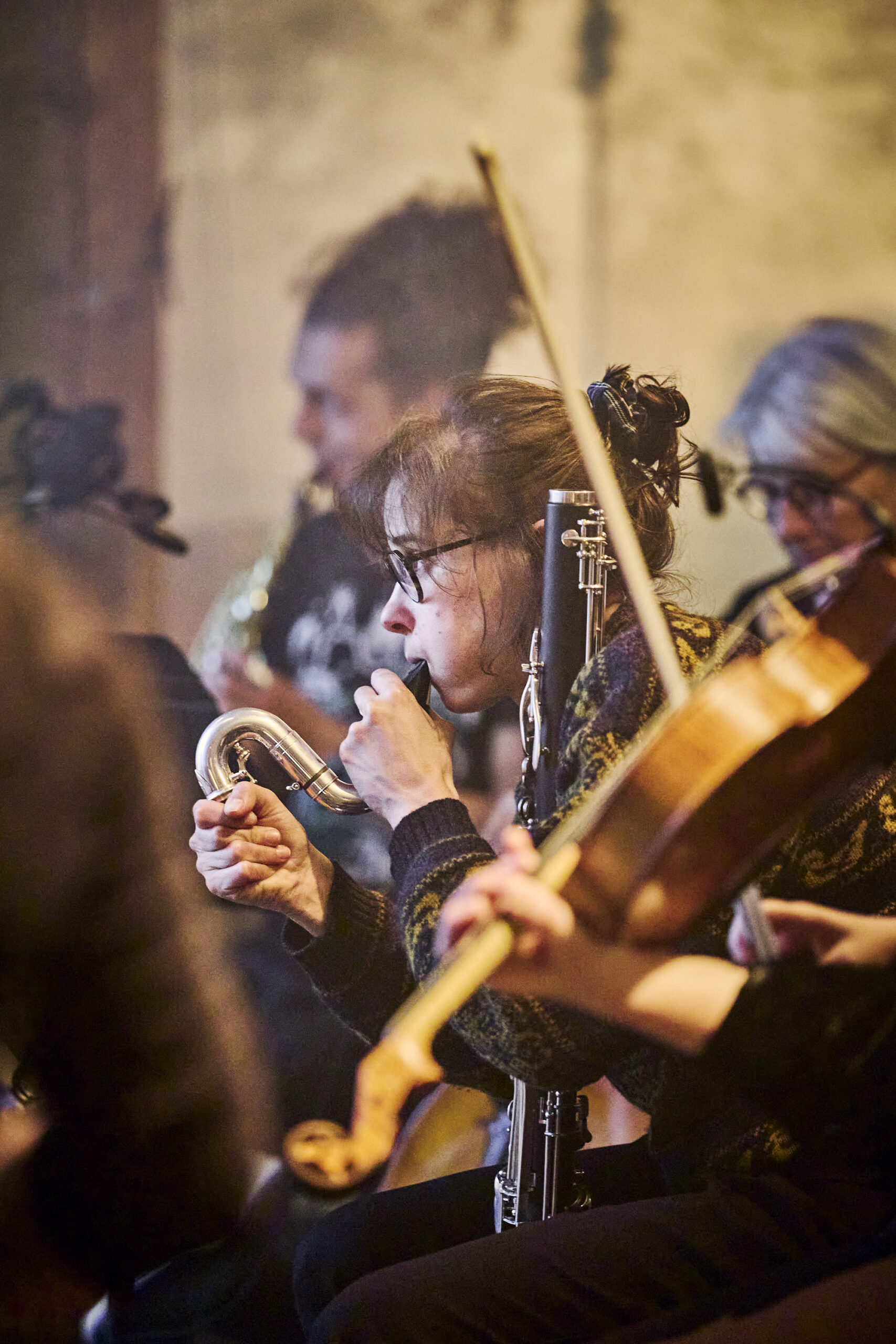
Pour cette création, l’ONCEIM (Orchestre de Nouvelles Créations, Expérimentations et Improvisations Musicales) déploie un ensemble de musicien·nes aux pratiques et aux horizons musicaux éclectiques. Leur interprétation musicale, construite dans l’instant, participe à cette écriture collective entre instruments acoustiques, expérimentations sonores et interventions électroniques.
Jean-Philippe Gross explore les possibilités du synthétiseur modulaire SERGE de La Muse en Circuit, dont les sonorités viennent dialoguer avec celles de l’orchestre et les autres matières sonores du plateau. La projection sonore est assurée par Vincent Laubeuf sur l’acousmonium MOTUS, un orchestre de haut-parleurs qui permet de déployer et de faire circuler les sons dans l’espace. Ce dispositif prolonge le travail électroacoustique et transforme les perspectives d’écoute en proposant une expérience sonore immersive.
Agenda
31.10.2026 | Représentation au Théâtre studio, Alfortville.
Dans le cadre du festival « Les Nuits de l’Étrange – 30 ans MOTUS ».
Distribution & Mentions légales
Distribution
Wilfried Wendling — Montage vidéo en direct
Jean-Philippe Gross — Synthétiseur modulaire SERGE
Juliette Adam — Clarinette
Martine Altenburger — Violoncelle
Sébastien Beliah — Contrebasse
Fabrice Charles — Trombone
Bertrand Denzler — Saxophone ténor
Benjamin Duboc — Contrebasse
Élodie Gaudet — Alto
Jean-Philippe Gross — Électronique
Rémi Durupt — Percussions
Frédéric Blondy — Direction musicale
Vincent Laubeuf — Spatialisation sonore sur l’acousmonium MOTUS
Mentions
Production : La Muse en Circuit – CNCM
Avec le soutien de la Spedidam


CINÉ-PERFORMANCE
NIGHT OF THE LIVING DEAD
A creation by La Muse en Circuit – CNCM
A LANDMARK FILM OF FANTASY CINEMA REIMAGINED THROUGH A STAGE AND SOUND CREATION FOR AN ENSEMBLE OF MUSICIANS, LOUDSPEAKERS AND MODULAR SYNTHESIZERS.
A landmark film that laid the foundations of a cinematic genre, but above all a particularly revealing contemporary mythology, George A. Romero’s Night of the Living Dead remains a monumental work which, nearly sixty years after its creation, continues to alert humanity to the potential monstrosity of our societies.
La Muse en Circuit – CNCM presents an original re-editing of the film and a performative staging that places music at the centre of the listening experience. A singular dialectic unfolds between modular synthesizers and an eclectic ensemble of contemporary musicians, extended by an immersive loudspeaker system.
A true formal laboratory, this creation explores interdisciplinarity through relationships between image and sound that transcend the screen and extend onto the stage. Rather than seeking illustrative interaction, the artistic approach plays with the synchronization of disparate dramaturgical elements, disrupting an overly academic reading of the narrative through image and sound.
A STAGE LANGUAGE BETWEEN IMAGE AND SOUND
The new edit of the film becomes the starting point for a stage composition that does not simply follow the on-screen narrative. Images and sounds develop their own forms of expression, responding to one another, creating contrasts and building a distinctive dramatic structure. Flashes and strobe effects, for example, become tools of visual storytelling, echoing the jump scares that this film helped popularise. They contribute to a contrapuntal approach to the stage, creating visual echoes of the sequences on screen.
The musicians move across the stage, extending the zombies’ macabre wandering and questioning what is still alive today. The stage becomes a space where physical presence, projected images, movement and sound come together.
The film thus becomes the starting point for a stage composition that questions the place of the living in music and the place of monstrosity in art.
AN EXTENDED ENSEMBLE : SOUND EXPLORATION AND SPATIALIZATION
The ensemble goes beyond its instrumental form, extending into a loudspeaker system that offers a non-realistic approach to the acoustic space of the stage. Close-miking techniques allow instrumental sounds to be spatialized through an electroacoustic approach. The aim is neither to reproduce nor simply amplify the orchestra’s sounds, but rather to take them out of their natural balance and create an immersive and unconventional listening experience. This approach translates cinematic techniques such as zooms, close-ups and tracking shots into the world of sound. Tiny, almost inaudible sounds produced by acoustic instruments are captured at close range, then transformed through successive processing stages involving microphones, mixing consoles and loudspeakers before travelling through space. Instrumental sounds thus become independent sonic materials, whose character and perception are profoundly transformed. The acoustic space is continuously shaped and reshaped throughout this exploration.
MODULAR SYNTHESIZERS AND SONIC MATERIALS
Modular synthesizers play a central role in this sonic construction. La Muse en Circuit’s legendary SERGE modular system opens up a field of exploration in which electronic sounds meet acoustic instruments and the noises produced on stage. The noise of a smoke machine can, for example, enter into dialogue with the noise generators of the SERGE Modular system, which in turn interact with the amplified friction of a bow against the strings of a cello. These encounters between very different sound sources create a stage composition in which the boundaries between music, noise and sound become blurred. Sounds are taken out of their original context, transformed and brought together to create new listening experiences. Through sound, these stage compositions question our relationship with beauty and its anthropophagic dependence on ugliness.
ONCEIM AND THE MOTUS ACOUSMONIUM
For this creation, ONCEIM (Orchestre de Nouvelles Créations, Expérimentations et Improvisations Musicales) brings together an ensemble of musicians with diverse musical backgrounds and practices. Their live performance contributes to this collective composition, bringing together acoustic instruments, sound experimentation and electronic interventions. Jean-Philippe Gross explores the possibilities of La Muse en Circuit’s SERGE modular synthesizer, whose sounds interact with those of the ensemble and the other sonic materials on stage. Sound projection is handled by Vincent Laubeuf using the MOTUS acousmonium, an orchestra of loudspeakers that allows sounds to move and unfold throughout the space. This system extends the electroacoustic work and transforms the listening experience, creating an immersive sonic environment.
Calendar
31.10.2026 | Théâtre-Studio, Alfortville
As part of the festival Les Nuits de l’Étrange – 30 ans MOTUS.
Cast & Credits
Cast
Wilfried Wendling — Live video editing
Jean-Philippe Gross — SERGE modular synthesizer
Juliette Adam — Clarinet
Martine Altenburger — Cello
Sébastien Beliah — Double bass
Fabrice Charles — Trombone
Bertrand Denzler — Tenor saxophone
Benjamin Duboc — Double bass
Élodie Gaudet — Viola
Jean-Philippe Gross — Electronics
Rémi Durupt — Percussion
Frédéric Blondy — Musical direction
Vincent Laubeuf — Sound spatialization using the MOTUS acousmonium
Credits
Production: La Muse en Circuit – CNCM
With the support of Spedidam